Ice bathing and ice swimming at Lake Achensee
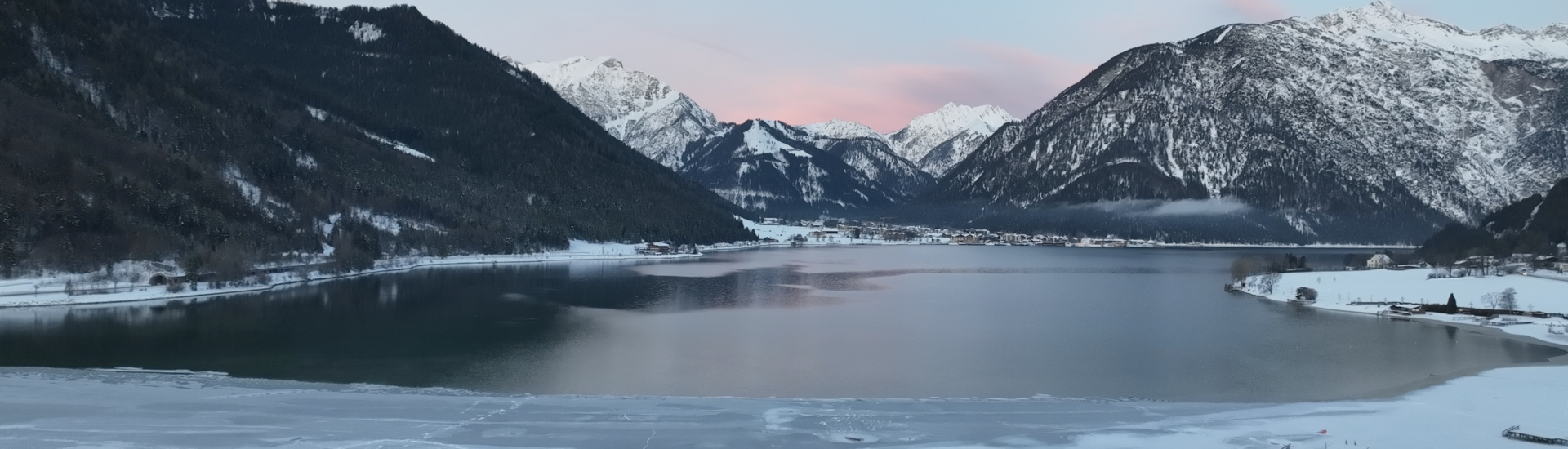
What does it feel like to plunge into Tirol’s largest lake in the heart of winter? Whether you are drawn to the quiet stillness of ice bathing or the athletic challenge of ice swimming, it is an intense encounter with nature. Surrounded by winter tranquility and fresh snow, you’ll experience Lake Achensee with newfound clarity. As you step into the crystal-clear water - breathing deeply, focusing inward - the rest of the world simply fades away. The effect is immediate: a soul-stirring surge of energy and a perfectly cleared mind. You’ll leave the water with a heightened sense of self, a glow of inner strength, and a memory of Lake Achensee you’ll never forget.
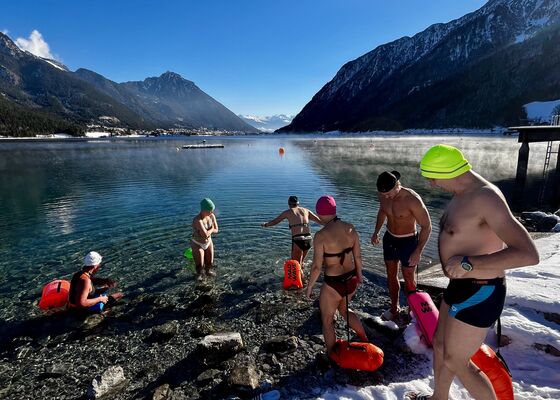
Ice swimming workshop at Lake Achensee
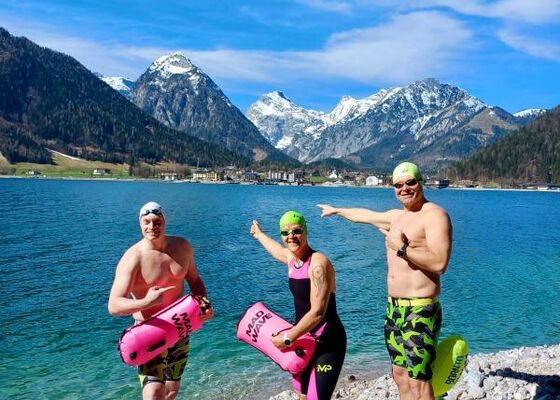
Ice swimming for advanced swimmers incl. swimming technique training
- Ice bathing is the practice of deliberately immersing yourself in cold water for a short, controlled period. The focus is on mindfulness, deep breathing, and the intense sensory experience of the cold. As a rule, you remain still in the water to feel its calming effect on the body. Safety note: Keep your head above water at all times, as your face and airways are highly sensitive to the cold. Wearing a hat is strongly recommended; it significantly reduces heat loss and helps stabilize your circulation and body temperature.
- Ice swimming is the athletic counterpart. Instead of remaining still, you actively swim through the cold water, covering a distance that suits your experience level. The focus here shifts toward endurance, technique, and the physical challenge of the elements. It is an exhilarating way to experience the extraordinary landscape of Lake Achensee.
Ice bathing and ice swimming invigorate blood circulation, stimulate the cardiovascular system, and strengthen the immune system. The cold water sharpens mental clarity, boosts energy levels, and can reduce stress. Overall, these practices enhance physical and mental well-being, providing a sense of renewed freshness and inner strength.
- Prepare at home by incorporating cold showers into your routine.
- Walk into the water slowly - up to your knees first - while maintaining calm, rhythmic breathing.
- The ideal time to transition to the lake is in autumn, before temperatures drop to their winter lows.
- Keep your head covered with a hat or hood to avoid rapid heat loss. Depending on the temperature, neoprene gloves and booties are also highly recommended to protect your hands and feet.
- Never go alone: Especially as a beginner, always swim or bathe with a partner or as part of a group.
- The first 30 to 60 seconds are the most challenging. Once your breathing settles, the experience becomes significantly more comfortable.
- Stay near the shore: Only enter the water at the lake’s edge; never venture toward the middle.
- Watch the clock: At a water temperature of 10°C, limit your initial sessions to one or two minutes.
- Use a safety buoy: For ice swimming, a bright tow-float (buoy) is essential. It ensures visibility for boats, provides buoyancy during cramps or exhaustion, and serves as a vital rescue device.
Important note: Always listen to your body and consider your personal health. We strongly recommend consulting a doctor before starting cold-water activities.
After your ice bath or ice swim, get dressed in warm layers as quickly as possible, move indoors, and drink warm tea. Engage in moderate movement to help your circulation but avoid staying outside. It is crucial to warm up gradually: the more hypothermic you feel, the slower this process should be. Avoid taking a hot shower or bath immediately, as the sudden heat can be dangerous for your circulation. Always allow your body temperature to stabilize naturally first.